We hear the drone before it reaches you.
Small microphones around ports, refineries and power stations listen for attack drones, and warn the people on site while there is still time to take shelter.
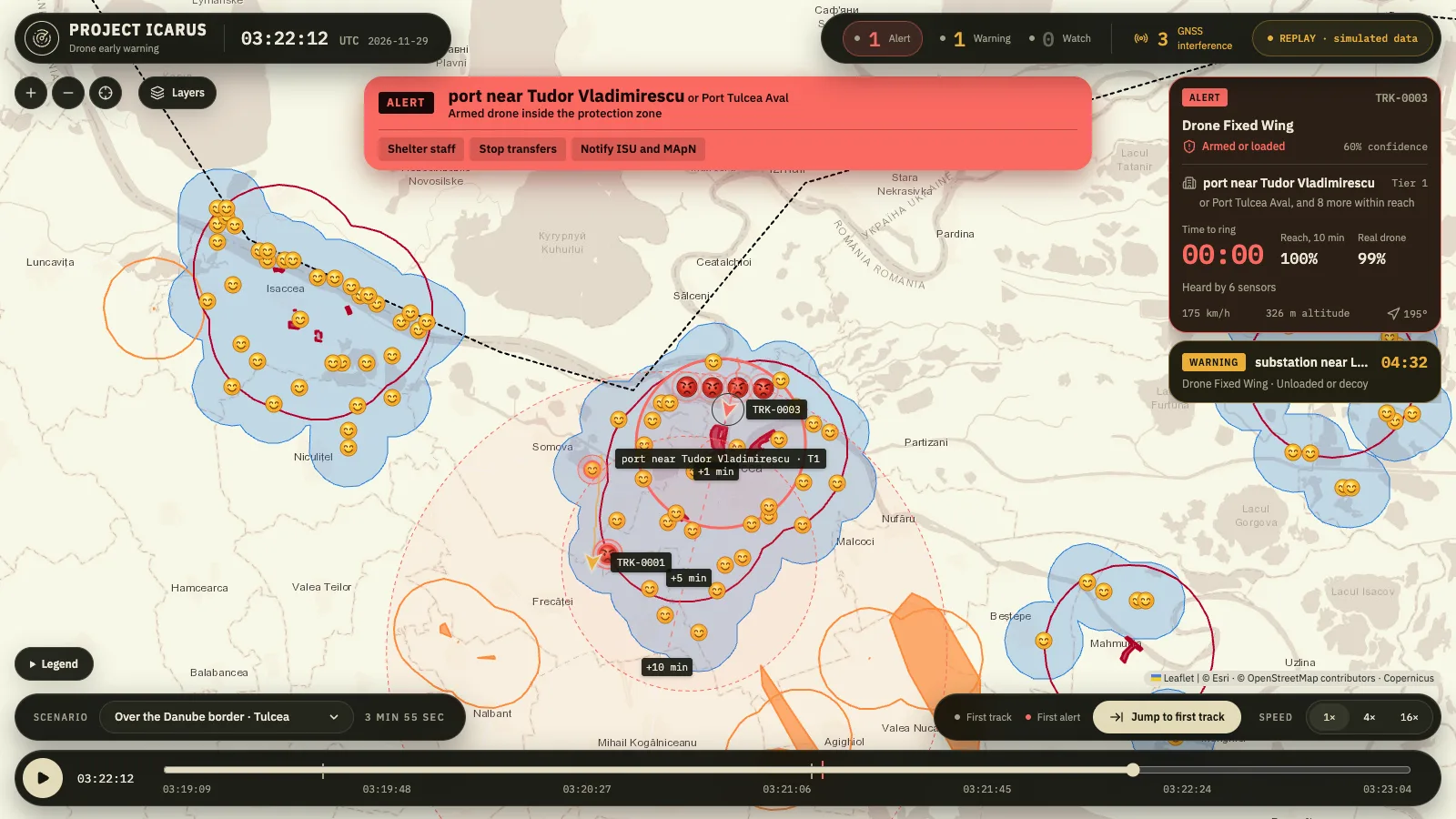
Watch an attack on the map
A simulated drone attack on Tulcea, as the person on duty would see it.
 Open the live map
How it works
Hear
Small microphones stand around ports, refineries and power stations. An attack drone is loud: they pick up its engine from more than two kilometres away.
Follow
Several microphones hearing the same drone tell us where it is, how fast it flies and which site it is heading for.
Warn
The people on duty at that site see it on a map, with the time left and what to do: take shelter, stop fuel transfers, call for help.
Where we are today
A working prototype on simulated attacks. Nothing here was measured in the field yet.
- 229
- critical sites in Dobrogea, ranked by how much their loss would hurt.
- 414
- microphone positions planned around the most important of them: 199 on land, 215 on buoys and platforms at sea.
- 97 s
- from the alert to the impact in our simulated attack over the Danube at Tulcea.
- 271 s
- when the drone comes in over the sea at Constanța and buoys at the anchorage hear it 12 km out; 79 s at Midia. From two of the five directions we tried, the buoys miss it and the drone is first tracked under 30 s before impact; this is the gap we are working on.
Built on European space systems
Copernicus gives us the terrain that decides where a microphone can hear from, and the radar images of the Black Sea we watch for vessels.
Galileo gives every microphone the same precise clock. Without it, several microphones could not agree on where a sound came from.
Kinéis satellites carry each microphone's short message out from places with no mobile signal, or where the signal is jammed.